Empowering Lives After Life-Changing Epilepsy Surgery
Since 2013, the Hemispherectomy Foundation Australia has supported children, young people, and their families navigating the extraordinary journey of hemispherectomy surgery. As an ACNC-registered, peer-led charity, they are driven by compassion, connection, and the belief that life after hemispherectomy can be full of possibility.
What is a hemispherectomy?
Hemispherectomy is one of the most radical neurosurgical procedures, removing or disconnecting one half of the brain to treat catastrophic epilepsy in children. Hemispherectomy is considered when seizures are severe, frequent, and resistant to medication. It sounds unimaginable, yet it’s a life-saving intervention that offers many children a chance to reclaim their future.
What’s even more astonishing? Children can live, usually with a much-improved quality of life with one hemisphere, once the seizing hemisphere is no longer impacting their entire brain.
But the path is not easy. Physical effects from hemispherectomy surgery include weakness on one side of the body and visual field differences. These outcomes are due to the loss of function in one hemisphere, but children often compensate well with therapy and support.
Before surgery, families have often endured months or years of relentless seizures and experienced the associated trauma of drug-resistant epilepsy. After surgery, they face a new reality that demands strength, support, and community. Occupational therapy, physiotherapy, and speech therapy help children regain skills and adapt to changes. Families play a central role in this journey, providing emotional support and advocating for their child’s needs.
For many, this complex brain surgery offers a path to seizure control, improved quality of life, and renewed hope.
Why Is It Needed?
Hemispherectomy is considered when seizures are severe, frequent, and resistant to medication. These seizures often stem from structural or functional abnormalities on one side of the brain. The conditions that may lead to hemispherectomy include:
- Rasmussen’s Encephalitis: A rare, progressive disorder causing inflammation and seizures in one half of the brain. This leads to frequent drug-resistant focal seizures, weakness on one side of the body, and cognitive decline.
- Sturge-Weber Syndrome: A rare neurological condition marked by abnormal blood vessels in the brain, eyes and skin, and a facial birthmark. Symptoms include seizures, glaucoma, developmental delays and cognitive impairment, headaches and stroke-like episodes.
- Perinatal Stroke or Brain Injury: Damage occurring around birth that later results in epilepsy. Seizures may be a consequence of the brain injury.
- Hemi convulsion-Hemiplegia-Epilepsy (HHE) Syndrome: A rare childhood condition beginning with prolonged seizures on one side of the body, often associated with a fever and followed by weakness on one side of the body. Focal epilepsy develops later.
- Hemimegaloencephaly: A rare congenital disorder causing one half of the brain to abnormally overgrow, leading to severe epilepsy, developmental delays, and progressive weakness on one side of the body.
These conditions often cause drug-resistant epilepsy, meaning seizures persist despite trialling multiple medications. In such cases, hemispherectomy may be the most effective treatment.
For families facing the uncertainty of severe epilepsy, hemispherectomy offers more than just seizure control, it offers the possibility of a fuller life. Children who undergo the surgery often go on to attend school, make friends, and pursue hobbies. While the road may be challenging, the outcomes can be transformative.
Hemispherectomy Foundation Australia provides resources, connection, and support to families navigating this journey, helping them feel less alone and more empowered.
The Hemispherectomy Foundation Australia mission
The Hemispherectomy Foundation Australia is dedicated to helping families rebuild their lives after epilepsy and hemispherectomy surgery. The Foundation celebrates courage, promotes resilience, and works to ensure no child or family walks this path alone. It provides peer support, advocacy, education, awareness and participation in research collaborations.
Hemispherectomy is more than a surgical procedure, it’s a turning point. The Hemispherectomy Foundation Australia exists to ensure that both before and after the surgery, there is support, understanding, and a community ready to embrace each child and family journey.
As one family shared, “Despite the initial challenges, the improvement in seizure control and overall well-being brings a sense of relief and hope for the future.”
For further information and more about Hemispherectomy Foundation Australia visit their website HFA – Hope in One Hemisphere
❤️ Eleanor’s story
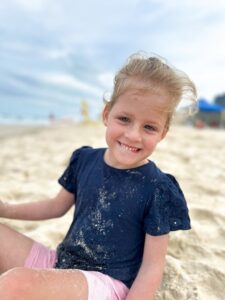
From the day she was born, Eleanor has been a fighter. Her journey is one of hope, resilience and pure determination.
Through every early obstacle, Eleanor’s strength carried her toward a hemispherectomy that would change her life.
The Cause
Eleanor suffered a prenatal stroke and brain bleed at 31 weeks.
She and her surviving twin sister (Ava) were born prematurely due to Twin-to-Twin Transfusion Syndrome (TTTS).
In her first months of life, Eleanor was diagnosed with cerebral palsy, hydrocephalus, cortical vision impairment, and later, infantile spasms along with focal and absence seizures.
Intervention
By six months old, she had already endured three major surgeries.
In her first four months, Eleanor underwent manual brain taps to manage her hydrocephalus until she was stable enough for a Rickham’s Reservoir. At eight weeks, she received a ventricular shunt, which had to be revised three months later due ongoing blockages.
Action
By age two, she was diagnosed with refractory epilepsy.
Despite every treatment tried, Eleanor’s seizures continued, leaving her family facing the difficult reality of refractory epilepsy. After trialling multiple medications with little success, they were offered a new path: hemispherectomy surgery.
Hope
Eleanor was almost four when she had her hemispherectomy.
At 3 years and 10 months old, Eleanor bravely underwent a functional hemispherectomy, a decision that carried both fear and hope in equal measure. The change in her was undeniable.
For more about Eleanor – go to https://hemispherectomyaustralia.org.au/eleanors-story/
Sources: