 Q: Does Vitamin B affect seizures?
A: Vitamin B6 is closely associated with functions of the nervous, immune, and endocrine systems and it is essential for nerve function. A deficiency in Vitamin B6 may cause seizures and these are usually seen in children but can also be seen in adults who are heavy drinkers. Treatment will not respond to antiepileptic drugs but will respond with B6 administration. B12 deficiency, which is more likely to occur in people following a vegan or vegetarian diet, has also been known to cause seizures and is treated with B12 supplementation.
If your diet isn’t great or you follow a vegetarian or vegan diet speak to your doctor about having your blood levels tested and possible vitamin supplementation.
Q: I have a puppy that is showing signs of alerting to my seizures. Is there an organisation that can help with training my puppy to respond in an appropriate manner and become qualified as an assistance dog?
A: There are many assistance dog organisations across Australia, however, most of these prefer to train a dog for a certain purpose before going to the owner. I have sourced A.W.A.R.E. Dogs Australia Inc. but you may find other services in your area.
A.W.A.R.E has services that are provided nationally. They obtain the majority of their animals from shelters and rescue groups. The program primarily supports members to train their own dog and are dedicated, where possible, to assist clients achieve full certification as assistance dogs.
I encourage you to have a look at their website. You can also call 1300 99 22 13 to gain a deeper understanding. https://awaredogs.org.au/
Q: I have a child with autism and I’m worried that he may also have epilepsy. Is there a connection between the two?
A: Compared to the general population, people with autism spectrum disorder (ASD) are at an increased risk of developing epilepsy and people with epilepsy are at a higher risk of being on the autism spectrum. The figures differ but are approximately 20 percent risk in both cases, however the rate of ASD in epilepsy is much higher in people with an intellectual disability.
It may be difficult to recognise seizure activity in ASD, sometimes because of the communication barriers and an overlap of symptoms such as:
- Frequent behaviours such as repetitive purposeless behaviours (“stimming”) of ASD can resemble automatisms seen in seizures.
- Attention deficit hyperactivity disorder, anxiety and sleep disorders are also common in both epilepsy and autism.
- Cognitive delay, impaired social interactions, and aggressive and irritable behaviour can be seen in some children with epilepsy and ASD.
If you are concerned that your child may be having seizures, then it is worth asking your GP for a referral to get an EEG (electroencephalogram) as a starting point.
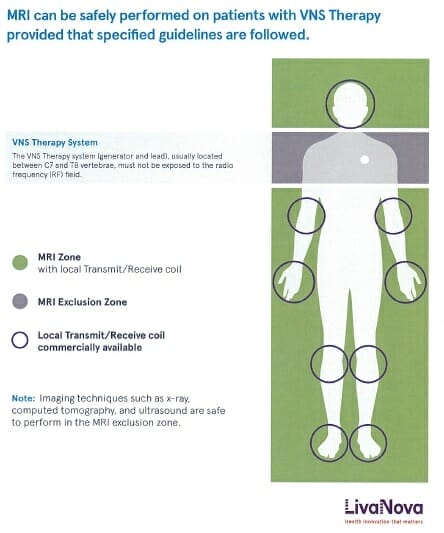
Q: I have a Vagus Nerve Stimulator implanted for my epilepsy. Am I able to have a MRI scan?
A: MRI can be safely performed with your implanted VNS Therapy system provided that specific guidelines are followed. Your neurologist should be familiar with these MRI guidelines. You may need to take a few steps first:
- The neurologist should add comments to the referral regarding your VNS
- When you ring to make the appointment, let the staff know you have an implanted VNS. They may want to know the model number and your referring neurologist. NOTE: it is quite likely that your neurologist will arrange the booking MRI in the same hospital that they work, and you don’t need to do anything here.
- Inform the radiologist and MRI technicians of your implanted VNS Therapy device and your seizure disorder.
- Do not bring your magnet into the MRI scanner room.
- If you feel any discomfort during the MRI, immediately notify the MRI technician.
There are some exclusion zones outlined here by LivaNova https://www.livanova.cyberonics.com/:
Q: Can Lamotrigine cause anxiety?
A: Lamotrigine is an antiepileptic drug that is sometimes prescribed as a mood stabiliser (including anxiety). This doesn’t mean it will manage anxiety in everyone, and although many people report it has a positive effect on their anxiety, some people report it makes it worse.
If you have anxiety and it has correlated with starting lamotrigine as a new drug, or with dose changes of lamotrigine, then it may be connected. It might be worth looking back as seeing if this is the case.
This site has quite a bit of information, including user reviews. Use the tabs at the top to navigate around https://www.drugs.com/mtm/lamotrigine.html
If you feel that the lamotrigine is the cause of your anxiety, and no other interventions have worked, then you will need to speak to your doctor to review it. As you probably know, it’s quite an effort to change medication, but worth it if this is impacting your daily life.