What is a chronic disease or illness?
 What is a chronic disease or illness?
When we say chronic disease, we are referring to long lasting health conditions with persistent effects. Some examples of chronic disease or conditions include diabetes, asthma, heart disease, endometriosis, arthritis and of course epilepsy. Chronic conditions are the leading cause of illness, disability and death in Australia.[i]
Chronic conditions can occur at any age, although they are more common as people get older. They often affect a person’s quality of life and can create limitations and disability. Many people with chronic conditions can experience more than one chronic condition at the same time.[ii] So, for instance, a person with epilepsy may also experience depression, or anxiety.
(For the purpose of this article, we will refer to chronic condition, but the terms chronic disease or chronic illness are used interchangeably and mean the same thing.)
With the right support and education, you can adjust to living with a chronic condition.
Epilepsy Action Australia specialist epilepsy nurses are available to offer support to GPs in the development of Chronic Disease Management Plans for people living with epilepsy. If you would like to further discuss this with one of our registered nurses book an appointment through the National Epilepsy Line here or ask your GP to make a booking.
Adjusting to your diagnosis
When you are first diagnosed with epilepsy, chances are you’ll have to make some adjustments to your lifestyle to reduce the risk of seizures or manage other symptoms. Generally, this is the case for any chronic condition. Whatever you’re experiencing, there are lifestyle changes you can make that can improve your physical and emotional health. For instance:
- Improving your diet and incorporating some regular exercise into your day
- Getting enough sleep
- Cutting down on alcohol and avoiding illicit drugs
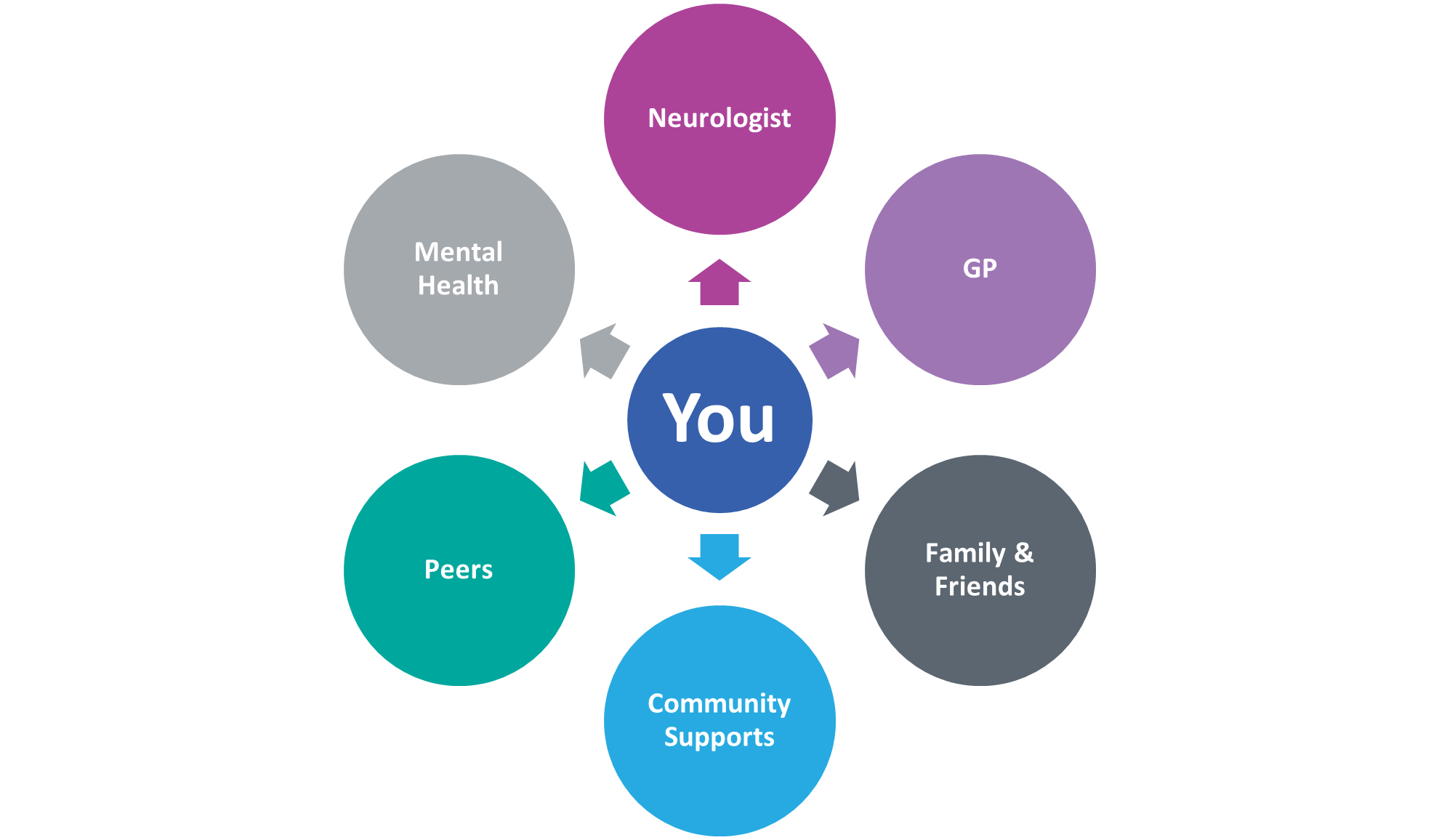
- Finding a GP who can help coordinate your appointments and keep on top of your symptoms and medications.
Understanding your epilepsy
It is really important to learn as much as you can about your epilepsy and the treatment. Having a better understanding will help you to ask the right questions with your doctor and get the most out of each appointment. It can also give you a sense of control and will empower you to make informed decisions about your medication, health, and lifestyle. Additionally, it will help you to identify what may be your seizure triggers and recognise situations that may increase the risk of a seizure for you.
Other things that can help you get a better understanding of your epilepsy is by keeping track of your seizures, side effects and any other symptoms. This can help you recognise patterns in when seizures occur and identify causes or seizure triggers. Here are some online tools that may help.
Living with epilepsy is more than just knowing your types of seizures and taking medication, it can affect your day-to-day life. Do some research about epilepsy, and even join a support group. Contact us if you have any questions.
Management plans with your General Practitioner (GP)
GP’s are generally your first port of call for any medical needs or advice. Your GP can play an important role in coordinating all your appointments, this is because all your results and letters from specialists go back to the GP meaning all your records are stored in one place. This helps to keep track of health-related issues. It may also spare you the cost of further tests as the GP can check your history for any previous results.
Australian GPs are encouraged to create a chronic disease management (CDM) plan for their patients with chronic conditions. There are two types of Medicare-funded plans in this scheme.
- GP Management Plans (GPMPs) are courses of action devised by you and your doctor to help you reach your healthcare goals.
- Team Care Arrangements allow your doctor to refer you to at least two other health professionals who will provide treatment or services to you.
These plans are determined by you and your GP to identify your health care needs and decide on a suitable course of action. They also help keep you in check with your health. Your GP can prepare a Chronic Disease Management Plan to help you access any support you may need.
If you are experiencing mental health issues such as anxiety or depression, your GP can also initiate a GP Mental Health Care Plan for you which lets you claim up to 20 sessions with a mental health professional each calendar year.
GPs often do this with assistance from practice nurses, Aboriginal and Torres Strait Islander health practitioners, Aboriginal health workers, and other health professionals.
Because of better treatments and management plans, people are living longer with chronic conditions.
Do you regularly talk to your GP about your epilepsy?
A GP Management Plan can help you better manage your epilepsy by providing an organised approach to care by: [iii]
- identifying your health and care needs;
- setting out the services to be provided by your GP; and
- listing the actions you can take to help manage your health.
The plans also help to:
- keep checks on your epilepsy and monitor any improvements, patterns or issues
- monitor medication effects, side effects and if you are taking your medication as prescribed
- reinforce or provide self-management advice, and
- collect information.
Why do one when I already see a specialist?
A good GP Management Plan should provide better management of your health condition. This means it should help:
- reduce hospital admissions,
- reduce length of hospital stays
- be used as central tool for the whole healthcare team for ease of patient management
- you be more involved in your health management and planning
In epilepsy, preparation of a GP Management Plan allows your GP to summarise past care and set treatment goals with the you. The plan can inform and guide all practice staff involved in your care.
How does it work?
When you next make an appointment with your GP, ask for a Chronic Disease Management Plan to be done. Your GP or practice staff must obtain your agreement before providing these plans.
In most practices, you will first sit down with the practice nurse and go through topics related to your health, lifestyle, and epilepsy – past and present.
Once a plan is in place, it should be regularly reviewed by your GP. This is an important part of the planning cycle, where you and your GP check that your goals are being met and agree on any changes that might be needed. [iv]
If a provider accepts the Medicare benefit as full payment for the service (this is usually the case), there will be no out-of-pocket cost. If not, you will have to pay the difference between the fee charged and the Medicare rebate.
The practice nurse can provide support and monitoring between visits to your GP.
Your GP will offer you a copy of your plan.
You and your GP should regularly review your plan/s. Try to make your epilepsy appointment with the same GP where possible.
Usually, you will be sent a reminder to come in and review you plan.
It’s about working together as a team