Cognitive difficulties include problems with memory, attention, concentration, planning or processing information. Cognitive and thinking difficulties are common in people with epilepsy and are often described as being secondary to epilepsy, meaning they happen alongside the condition or are caused by it. Many people assume that having seizures damages the brain, but the relationship is more complex, and seizures, medications, sleep, stress, and the underlying cause of epilepsy can all play a role (Helmstaedter & Witt, 2017).
Research shows that 60–70% of people with chronic epilepsy experience some degree of cognitive difficulties, and many notice these problems from early in their diagnosis, sometimes even before starting medication (Helmstaedter & Witt, 2017).
Why does this happen? The answer is more complex than many people realise.
Seizures on their own rarely cause long term cognitive decline
There is little evidence that recurrent seizures, by themselves, cause progressive cognitive deterioration in most chronic epilepsies.
However, when epilepsy begins early in life, it can affect a child’s cognitive development and make it harder to learn new skills – not because they’re losing abilities, but because the early epilepsy onset interferes with how those skills are built in the first place.
Cognitive problems often exist from the onset of epilepsy, if not before, meaning that cognition and epilepsy may both stem from the same underlying brain condition, rather than one causing the other.
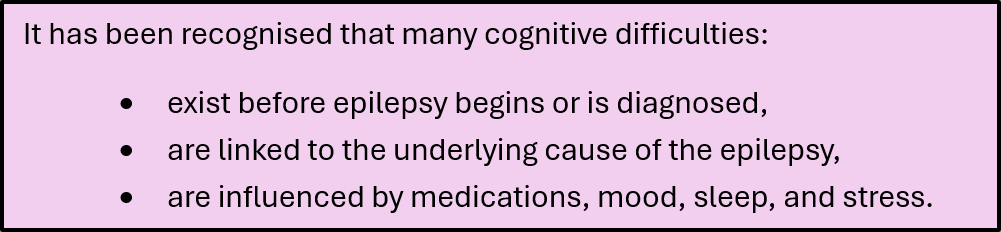
In one study of adults with new‑onset epilepsy, up to 70% already had some cognitive difficulties before starting treatment, particularly with attention, memory, and executive skills. (Helmstaedter & Witt, 2017).
One of the most important shifts in thinking is recognising that epilepsy rarely acts alone in causing cognitive difficulties, there can be many contributing factors. Which means there are many points at which things can be worked on or improved.
Contributing factors can include:
- Seizures – can temporarily affect thinking, during and after a seizure.
- After seizures – confusion, fatigue, and memory lapses are common, and for some people this post seizure period can last hours or days.
- Nocturnal seizures – If a seizure occurs in the evening or during the night, it can significantly disrupt sleep patterns, leading to poor sleep quality and daytime fatigue, drowsiness, or exhaustion the following day. Hence, if someone has regular seizures during the night, cognition and learning will be affected.
- Between seizures – Even between seizures, abnormal electrical activity in the brain that doesn’t produce obvious outward symptoms can quietly interfere with memory and concentration processes.
- Frequent seizures, especially tonic clonic seizures, can contribute to poorer cognitive outcomes over time (Helmstaedter & Witt, 2017).
- The cause of the epilepsy – such as structural changes in the brain, genetic factors, previous brain injury, stroke, and more. In many cases, the underlying cause is responsible for both the seizures and any cognitive difficulties (Novak et al., 2022).
- Medication – anti-seizure medications work by calming electrical activity in the brain, and for some people that calming effect is felt cognitively as well. This may be slowed thinking, word-finding difficulties, or memory lapses especially when taking more than one medication. However, antiseizure medications can also improve cognition by reducing seizures, improving sleep, and stabilising mood (Novak et al., 2022).
- Mood – depression and anxiety are common in epilepsy and can significantly affect concentration, memory, and motivation (Helmstaedter & Witt, 2017). Managing mental health in someone with epilepsy can lead to meaningful improvements in cognitive function as well as improve seizure control and quality of life (Cronin et al 2023).
- Sleep – sleep disorders occur often in people with epilepsy. There is a high frequency of obstructive sleep apnoea in adult epilepsy. Poor sleep quality or not enough sleep may increase the risk of seizures. Sleep disorders and night‑time seizures disrupt sleep and can significantly reduce cognitive performance the next day (Latreille et al 2018).
Who is at higher risk of decline?
Some factors are associated with poorer long‑term outcomes:
- ongoing uncontrolled seizures – drug resistant epilepsy
- frequent tonic‑clonic seizures
- traumatic brain injury
- structural brain abnormalities
- high medication load
- lower baseline cognitive ability
(Helmstaedter & Witt, 2017).
Other existing conditions influence epilepsy outcomes
Co-existing health conditions are common in people with epilepsy across the lifespan, and include medical, psychiatric and cognitive conditions alone or in combination. Their presence can affect diagnosis, treatment, medical costs and quality of life (Seidenberg et al 2009). They can impact seizure control and affect quality of life more than the epilepsy (Kanner et al 2024).
Treating the seizures is not enough, cognitive and mood issues need their own support.
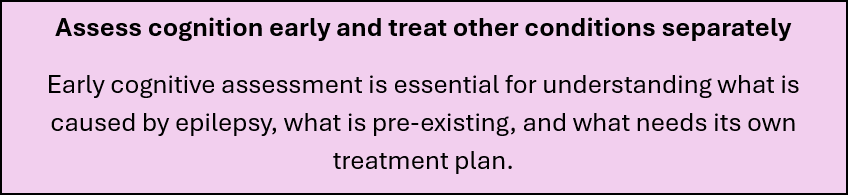
Should there be cognitive screening at diagnosis?
Because thinking and memory difficulties are often present when epilepsy is first diagnosed, perhaps cognitive screening should become a routine part of care for both adults and children?
Checking a person’s cognitive skills early provides an important baseline. It helps doctors understand what someone’s thinking and memory were like before treatment begins. This makes it much easier to track changes over time and to work out whether any differences are due to:
- how well treatment is working
- medication side effects
- changes in seizure activity
- changes in the underlying brain condition
(Helmstaedter & Witt, 2017).
Early screening also helps people and families understand their strengths and challenges from the start and ensures support can be put in place sooner rather than later.
What this means for everyday life
Cognitive difficulties in epilepsy are not just a clinical measurement. They have real effects on daily life that are invisible to others. Problems with concentration, processing information, memory, word-finding, or mental fatigue can make ordinary daily tasks more difficult and exhausting. People may find it harder keep up with work or study demands, remember appointments, follow conversations, multitask, or make decisions quickly. Even activities such as shopping, managing finances, or planning the day can require more effort.
For children and young people, cognitive difficulties can influence learning, classroom participation, behaviour, friendships, and independence. Adults may experience impacts on employment, career progression, and financial security. Employment rates are lower among people with epilepsy, reflecting not only seizure-related safety restrictions, but also the combined effects of cognitive difficulties, fatigue, mental health challenges, stigma, and unpredictability.
Overall, the wider effect may contribute to reduced confidence, anxiety, withdrawal, and social isolation.
What can help support cognition?
While not all cognitive difficulties can be prevented, many strategies can improve day‑to‑day functioning and quality of life.
- Good seizure control
Reducing seizure frequency can help. If your current medication isn’t achieving good control, it’s worth discussing other forms of seizure management with your neurologist such as a different medication, surgery, neuromodulation, or lifestyle strategies.
- Reviewing medications
If you notice cognitive side effects after starting or increasing a medication, raise it with your doctor. Adjusting the dose slightly or changing to a different medication or regime may help – these conversations are worth having.
- Addressing mood and mental health
If you are experiencing low mood, mood changes, depression or anxiety, treating those conditions is important as well and may also benefit your thinking and memory. Raise this with your doctor.
- Prioritising sleep
Good sleep practices can help daytime alertness and concentration – go to bed and rise at the same time each day, speak to the doctor if you feel you might have a sleep disorder, and better management of night‑time seizures can help restore mental energy.
- Getting a cognitive assessment
Cognition should be assessed early, ideally around the time of diagnosis, so that any difficulties are identified and not simply attributed to medication or seizures without investigation. Neuropsychologists can provide targeted strategies to support memory, attention, and executive skills. Speak to your doctor about getting a neuropsychological assessment.
- Using practical strategies
Memory aids, structured routines, written lists, phone reminders, or make an appointment with an occupational therapist or neuropsychologist for some strategies.
- Healthy brains
Lifelong learning, social participation, physical activity, and mentally stimulating activities all help strengthen brain networks.
Summary
- Cognitive difficulties are common in people with epilepsy but usually have many contributing causes.
- The underlying brain condition, seizures, medication, mood, and sleep all play a role.
- Often cognitive problems are present before epilepsy begins.
- Seizures alone rarely cause progressive decline.
- Support, treatment, and lifestyle strategies can make a meaningful difference.
Cognitive changes in epilepsy are real, common, and can fluctuate in people with epilepsy. Some days are better than others. Recognising these difficulties and understanding that they are part of the condition for many people, can help individuals, families, schools, workplaces, and healthcare professionals provide more supportive and realistic environments.
See Epilepsy and Memory Factsheet
MemoRehab is a memory‑skills rehabilitation program designed to help people with epilepsy (and other neurological conditions) improve everyday memory, confidence, and thinking skills. It is evidence‑based, clinician‑led, and delivered either in person or via telehealth. Click here to learn more
New Resources for Supporting Education – Coming Soon
We will soon be launching two new resources to support students, parents and teachers.
- Epilepsy: Learning impacts and classroom strategies a short online course for teaching staff designed to support students with epilepsy
- Learning support screener to identify a students strengths and challenges and provide a personalised report with strategies to help